

Dragon Physics
Standard physics problems often strip away context, leaving students with disconnected numbers on a blank page. Dragon Physics anchors every calculation in a distinct biological container — a creature whose mass, wing geometry, internal gas sacs, claw grip, or cranial resonators create real physical trade-offs.
When students solve problems for a Thermal Glider, Pelagic Diver, Pyrogenic Stoker, Lithic Anchorer, or Acoustic Resonator, they aren't just plugging values into equations. They are reasoning about how structure, environment, and physical limits shape what is possible.
What Makes This Approach Effective for Educators
- Built-In Physical Constraints: Every dragon carries consistent anatomical and environmental parameters across multiple problems, helping students track units, boundary conditions, and scaling relationships rather than treating each question as an isolated trick.
- Cross-Topic Transfer Within One System: A single biological container can span kinematics, fluid dynamics, thermodynamics, statics, and waves — allowing instructors to revisit familiar organisms as students build mathematical and conceptual maturity.
- High Engagement Without Sacrificing Rigor: Speculative ecology sparks curiosity immediately, while the underlying math stays grounded in real equations like the torque equilibrium sum, hydrostatic pressure, adiabatic compression, and the Doppler shift.
- Flexible Classroom & Workshop Use: Pair the illustrated profile cards with problem sets for warm-ups, lab extensions, inquiry discussions, or multi-level STEAM intensives — from introductory algebra-based physics to deeper analytical work.
From Abstract Formulas to Living Constraints
Dragon Physics treats each organism as a coupled physical system. Instead of memorizing isolated formulas, learners examine how mass, geometry, pressure, and energy flow interact inside a defined container — building stronger intuition for modeling real-world systems.
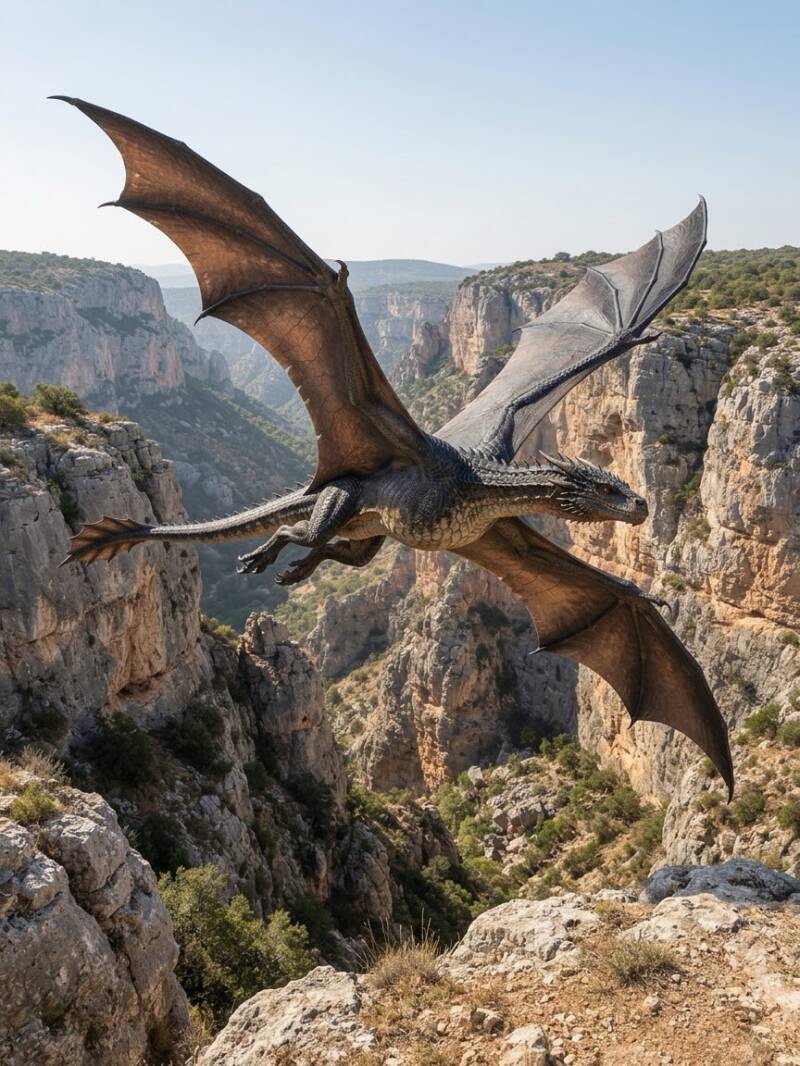
The Thermal Glider
Domain: Atmospheric / Karst Cliffs. Mass: 450 kg. Wingspan: 18 m. Wing Area: 27 m². Aspect Ratio: 12. Still-air minimum sink rate: 1.1 m/s at 18 m/s airspeed.
Primary Mechanics: Thermodynamics, Aerodynamics, Lift & Drag, Radiative Heat Transfer
Adaptive Biology: 18 m high-aspect-ratio wings, lightweight 450 kg frame, dark solar-absorbing dorsal scales.
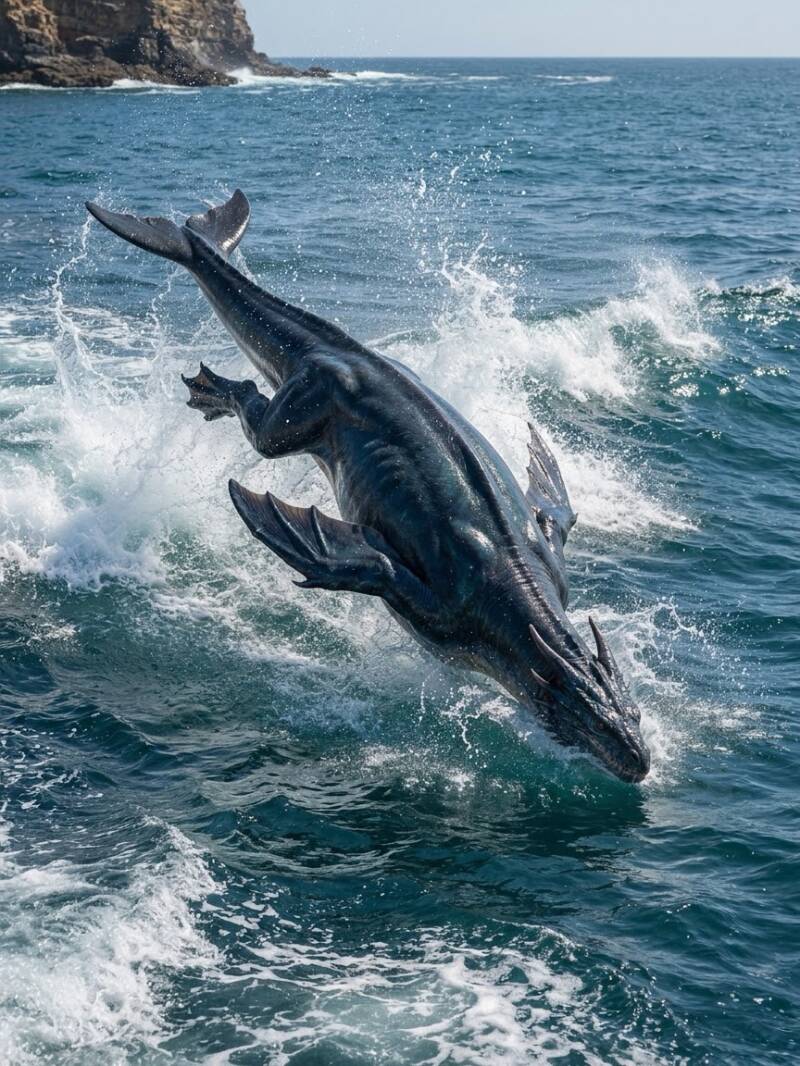
The Pelagic Diver
Domain: Open Ocean / Pelagic Zone. Mass: 1,200 kg.
Primary Mechanics: Hydrostatics, Fluid Drag, Boyle's Law, Work-Energy & Momentum
Adaptive Biology: Streamlined 1,200 kg body, compressible internal gas sacs, hydrodynamic flipper-wings, diving musculature.
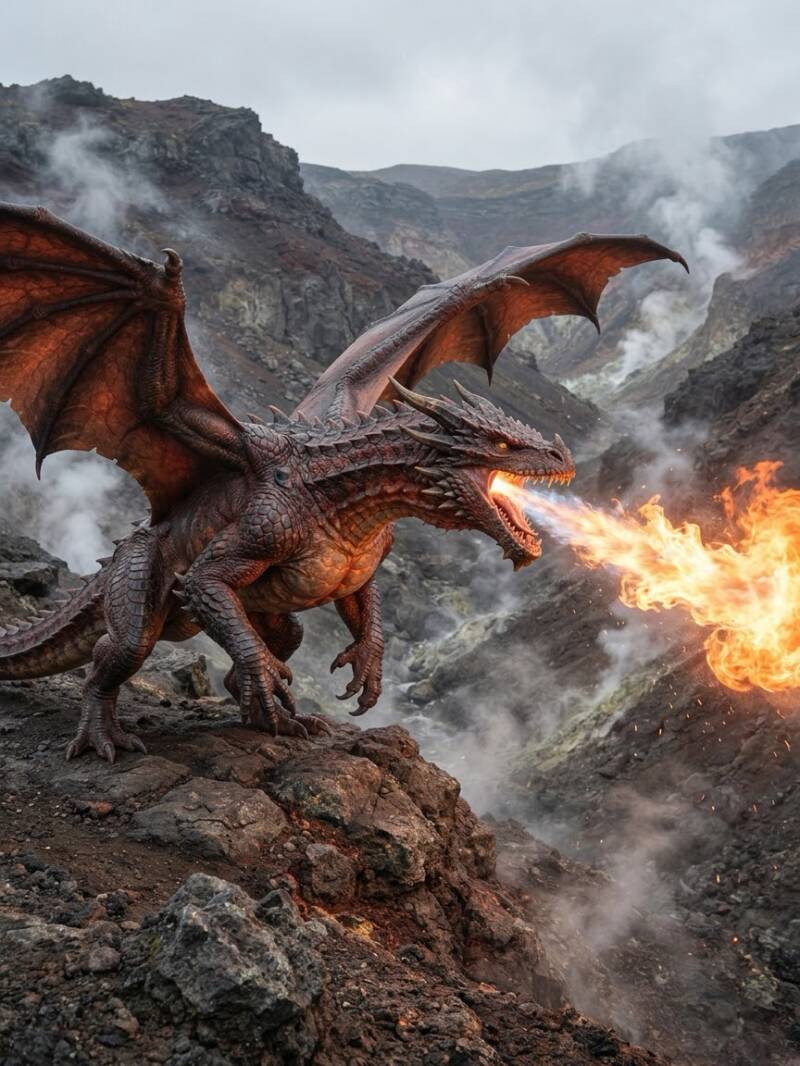
The Pyrogenic Stoker
Domain: Volcanic & Geothermal Ridges. Mass: 600 kg.
Primary Mechanics: Gas Laws, Adiabatic Compression, Fluid Continuity, Impulse & Momentum (Recoil)
Adaptive Biology: Dual-chambered thoracic crop for bio-gases, variable-aperture palatal nozzle, 600 kg volcanic-adapted build.
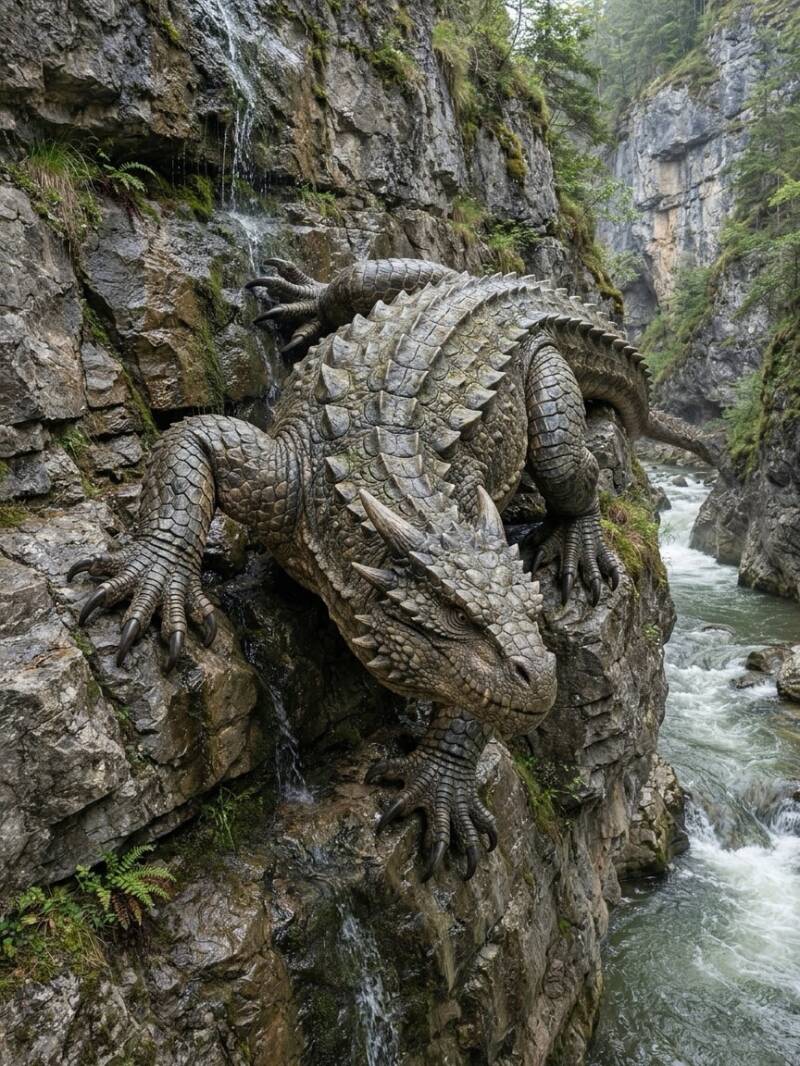
The Lithic Anchorer
Domain: Coastal Cliffs & Fast-Flowing Riverbeds. Mass: 2,800 kg.
Primary Mechanics: Statics, Rotational Equilibrium & Torque, Friction, Material Stress/Strain
Adaptive Biology: Dense 2,800 kg mineralized skeleton, low-slung center of mass, specialized hooked gripping claws for sheer cliffs.

The Acoustic Resonator
Domain: Canyons & Dense Canopy Forests.
Primary Mechanics: Wave Mechanics, Helmholtz Resonance, Doppler Effect, Acoustic Intensity
Adaptive Biology: Hollow chambered cranial crest, expandable corrugated throat pouch, low-frequency vocalization adaptation.
Physics Teachings
College-level dragon physics and calculus, built for classrooms and homeschools. Dragon Physics readings first, then the calculus — the Dragon's Calculus Match instructor guide with worked solutions, the Tiny Dragons water-column problem set, and The Dragon and the Fractalled Mirror, with student copies for reading along. Skills this bundle builds: calculus (rates of change, accumulation, related rates, maxima and minima, arc length, definite integrals); physics (Doppler shift and acoustic energy, hydrostatic pressure and isothermal compression, torque and tipping thresholds, impulse, momentum, and adiabatic work); thinking (variable-condition reasoning, checking units and orders of magnitude, subject before container).